FORGE
Operator software for the ground system that processes the Space Force’s missile warning satellite data.
The program
FORGE (Future Operationally Resilient Ground Evolution) is the government-owned ground system that processes missile warning data from the SBIRS and Next-Gen OPIR satellites. SciTec leads the current contract, and SMX is part of its team.
Prototypes that ship
As design lead I reorganized how UI and UX work ran across the project. I redesigned existing features of the product and worked out new ideas with the program managers.
Then I built those ideas in React, including 3D globe views rendered with WebGPU, using the same reusable components as production. The prototype that got approved was built from the parts that shipped, so an accepted idea didn’t have to be rebuilt from scratch.
I ran the reviews where the customer, the U.S. Space Force, approved each prototype for the production build. Those reviews included a number of senior Space Force leaders.
Leading the team
I redefined how design worked on the program: the process the team followed, which stakeholders were involved and when, and how we learned from the customer. That included running discovery events with the U.S. Space Force before ideas were designed.
I also managed the team of designers. I helped them learn to code and to work in a demanding classified environment.
UXDS
The internal React component library our team builds FORGE on, plus a prototyping engine that turns a sketch into a working prototype.
The library
Astro, the open design system for space operations software, is no longer actively maintained, and it never covered everything FORGE needed: there were gaps, inconsistencies and missing components.
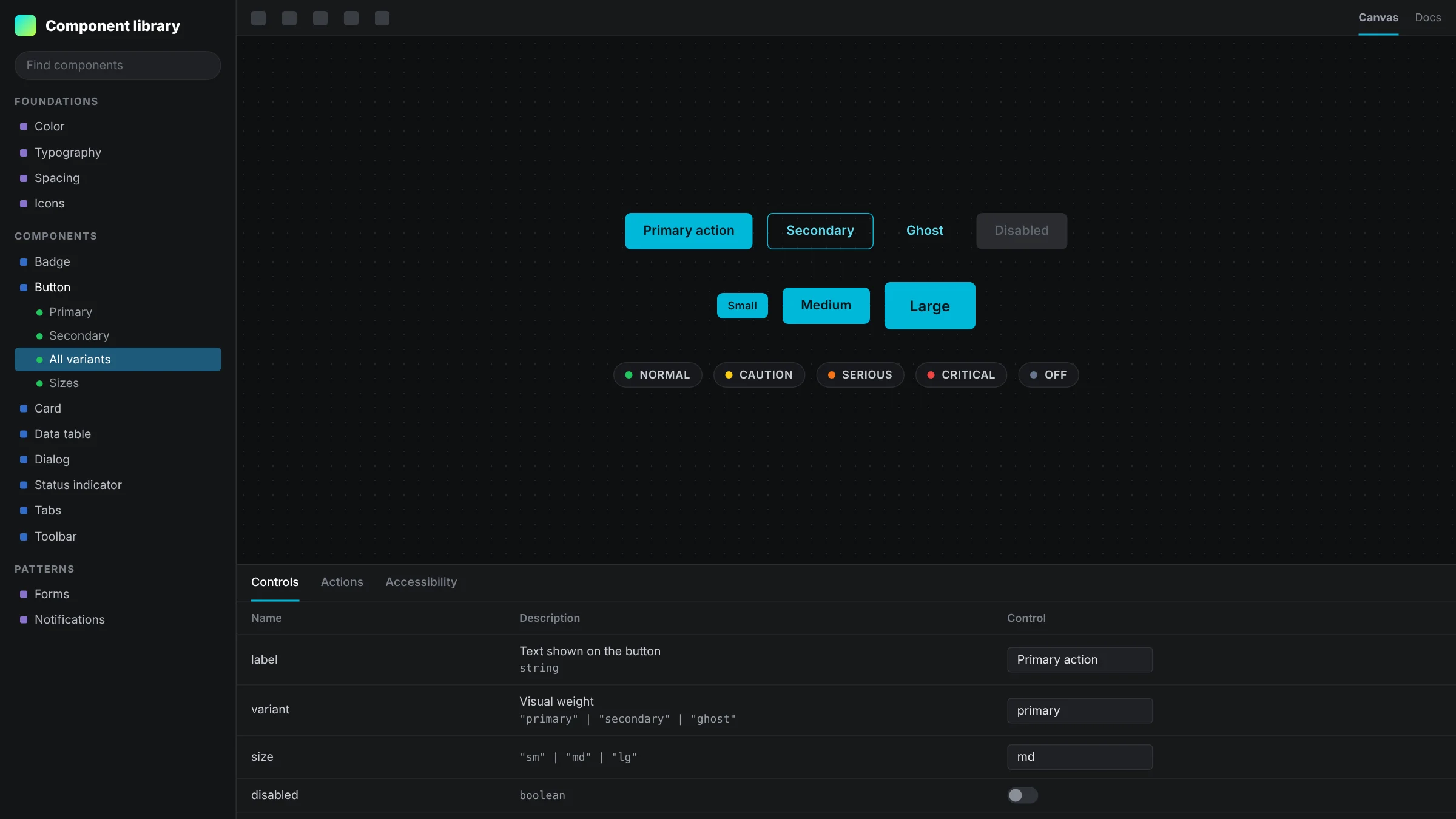
So for FORGE I built UXDS, an internal React component library that replaces Astro for our team. It’s distributed through npm, and every component is documented in Storybook.
Compliance checking
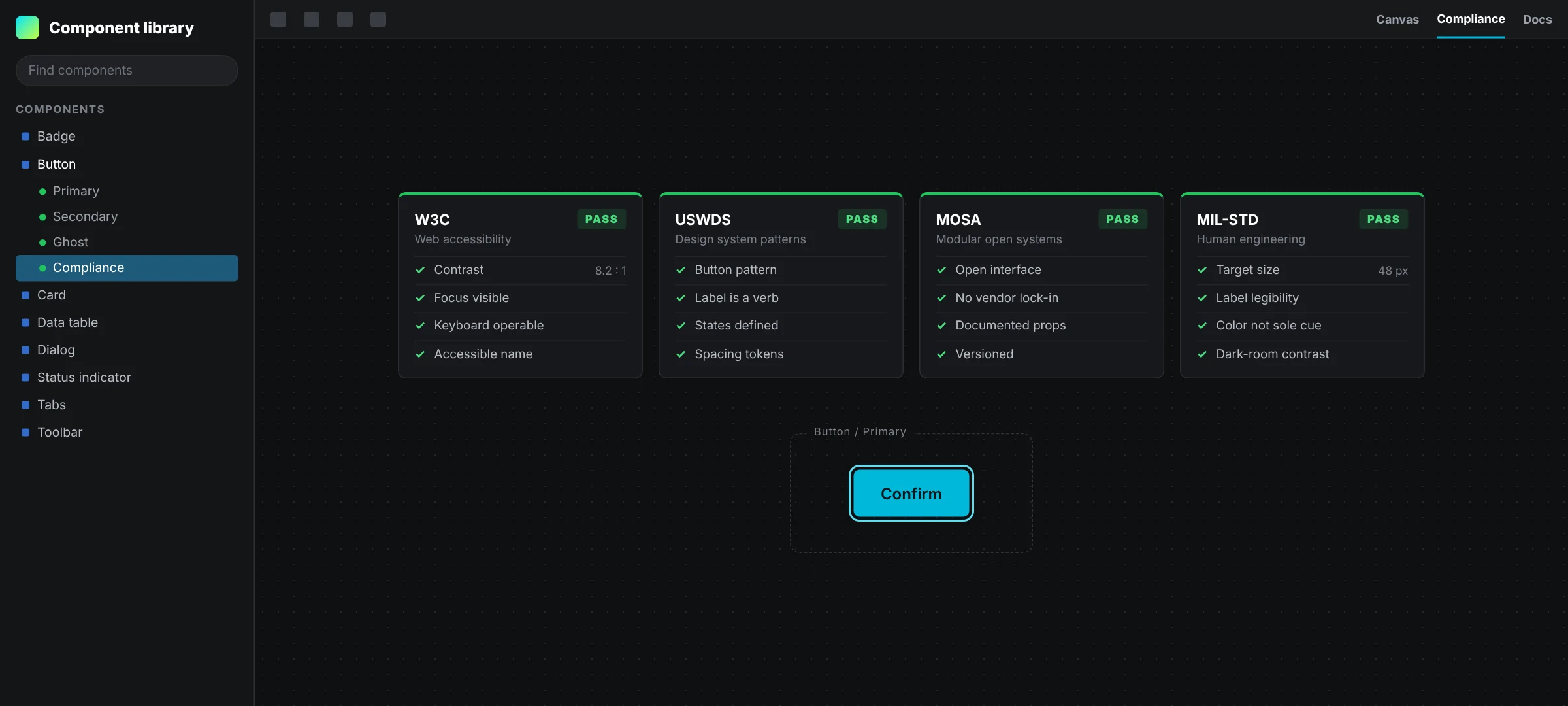
Defense software has to meet more than one rulebook. Every UXDS component is checked against four sets of guidelines: W3C accessibility standards, U.S. Web Design System patterns, the Modular Open Systems Approach (MOSA), and military human engineering standards. Each component’s page in Storybook shows where it stands against all four.
The prototyping engine
On top of the library I built a prototyping engine that runs on a set of MCP servers. Given a design, it identifies what it’s looking at and runs it through the same compliance checks.
It can then take a sketch or an image of a design and rebuild it using only UXDS components, creating new components when the library doesn’t have one.
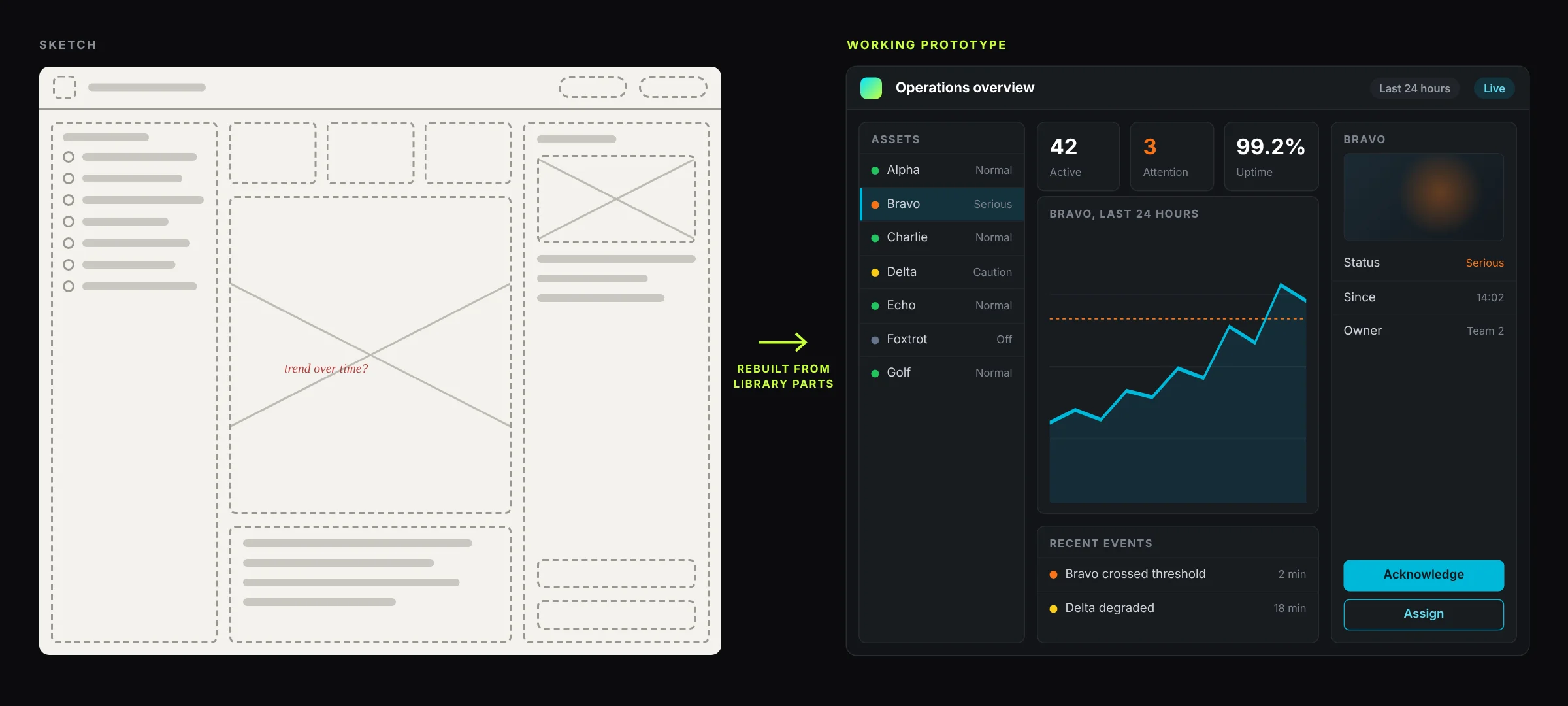
The lesson I took from it: the slow part of design is rarely the idea. It’s getting to something people can react to. When the engine handles the first 80%, a review starts with a working prototype instead of a slide, and my time goes to the last 20%, where the real design decisions are.
Golden Dome
Operator interfaces for two Golden Dome battle management proposals, built at the same time as UXDS.
The program
Golden Dome for America is the Defense Department’s effort, started by executive order in January 2025, to build a layered air and missile defense for the United States: sensors on the ground and in space, interceptors at several ranges, point defenses and electronic warfare.
The proposal
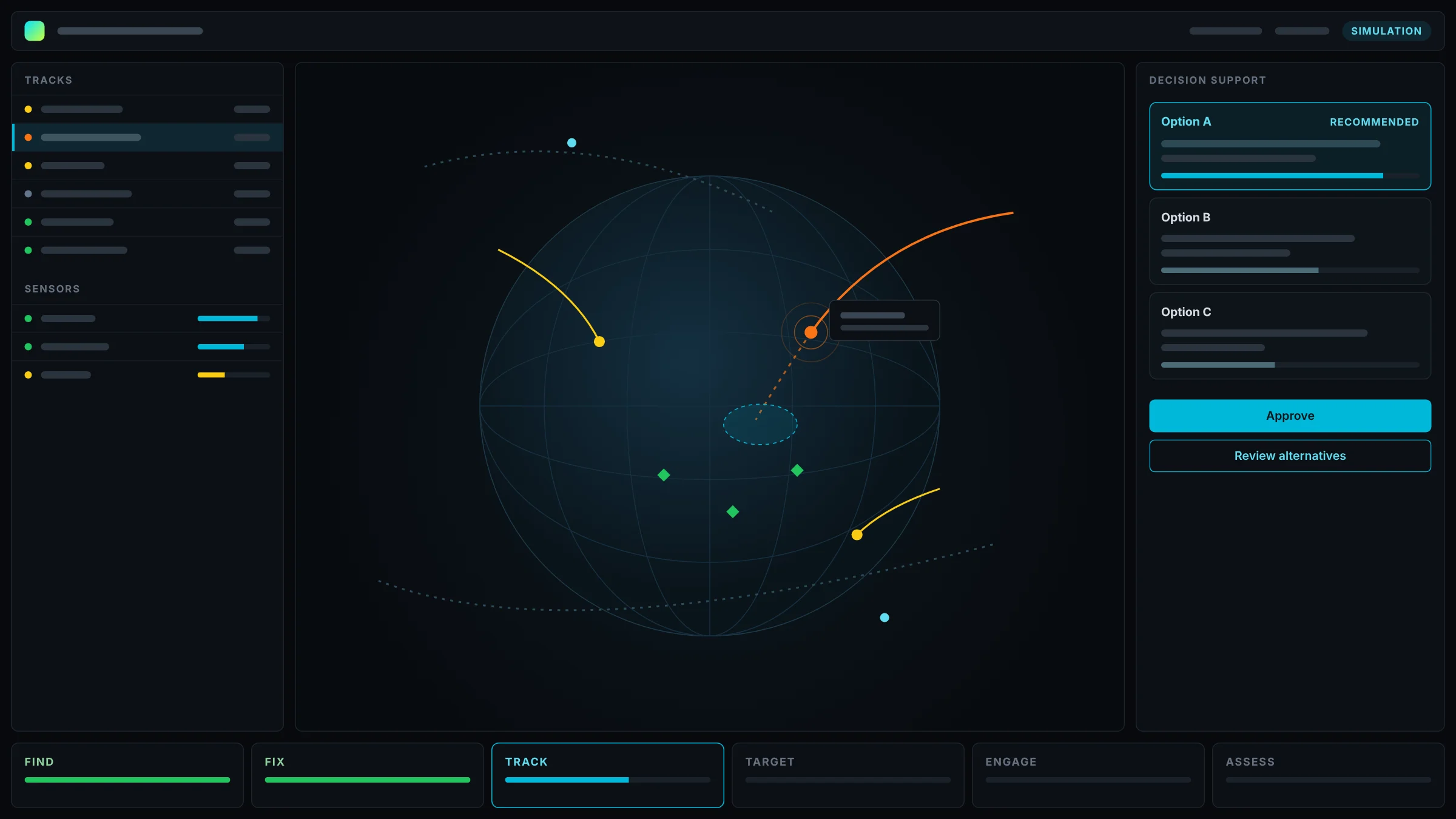
SciTec describes its Golden Dome work as next-generation battle management, built around six steps, from finding a threat to assessing the result. Its pitch is a commercial-first, open architecture, with decision-support tools meant to augment human decision-making rather than replace it.
From 2025 into 2026 I designed and built operator interfaces for SciTec’s proposal, and for a second client’s proposal at the same time. On both I was a one-person shop: every design process and output, the front-end development, and the presentations to the customer.
The prototypes were built in React, with WebGPU and custom shaders rendering the 3D views. They ran on mock data provided by the government, and every battle scenario could be replayed, so a reviewer could watch the same situation unfold again step by step. Reviewers judged the interface by watching it work, not by reading a description of it.
One designer, several teams
From 2025 into 2026, UXDS and both Golden Dome proposals were in progress at the same time, and I built all three myself: the design, the front-end and the customer presentations.
Two things make it possible. AI agents do the repetitive build work under my direction, so my time goes to design decisions. And all three are built from the same component library, each with its own theme. When a project needs a component the library doesn’t have, I build it there and add it back to the library, so the next project starts with more.
Public sources
Space Systems Command on the FORGE contract, SMX on joining SciTec’s FORGE team, SciTec on the September 2025 delivery, SciTec on Golden Dome, and the Congressional Research Service on the Golden Dome program.